
After more than five and a half years of war, members of the German military high command signed an unconditional surrender to Allied forces in Reims, France on May 7, 1945.
By that time, the war in Europe had claimed the lives of tens of millions of people including 6 million Jews who had been systematically killed in the Holocaust at the hands of the Nazis. After a successful landing in Normandy, Allied forces had liberated Western Europe and pushed into the German heartland, while Soviet forces advanced from the East until they had surrounded Berlin.
As the reality of total defeat set in, Nazi leadership began to crumble. Just days after German Chancellor Adolf Hitler committed suicide, his successor, Grand Admiral Karl Dönitz, sent General Alfred Jodl to negotiate a partial surrender to the Western Allies. Dönitz hoped he could split the alliance and focus every remaining soldier on holding back the Red Army. The Eastern Front had been a war of extermination. Germany’s invasion of the Soviet Union (Operation Barbarossa) was more than a territorial dispute—it was a racial crusade designed to slaughter and enslave the population to make room for Aryan settlers. The fighting was brutal and captured Soviet army officers were routinely executed instead of being treated as prisoners of war. Now on the eve of their own surrender, the Germans feared that Soviet retribution would be severe.
When Jodl arrived in Reims to negotiate, Supreme Commander General Dwight D. Eisenhower refused to even meet with him. Eisenhower knew that any partial surrender would fracture the Allies and lead to a diplomatic crisis with Soviet leader Joseph Stalin, who was already suspicious that the West might cut a secret deal.
Instead, Eisenhower deftly used Germany’s fear of the Soviets against them. In an ultimatum issued through his Chief of Staff, Walter Bedell Smith, he decreed that unless Germany surrendered on all fronts simultaneously, he would immediately close the Western lines—in effect forcing fleeing German soldiers to surrender to the Soviets.
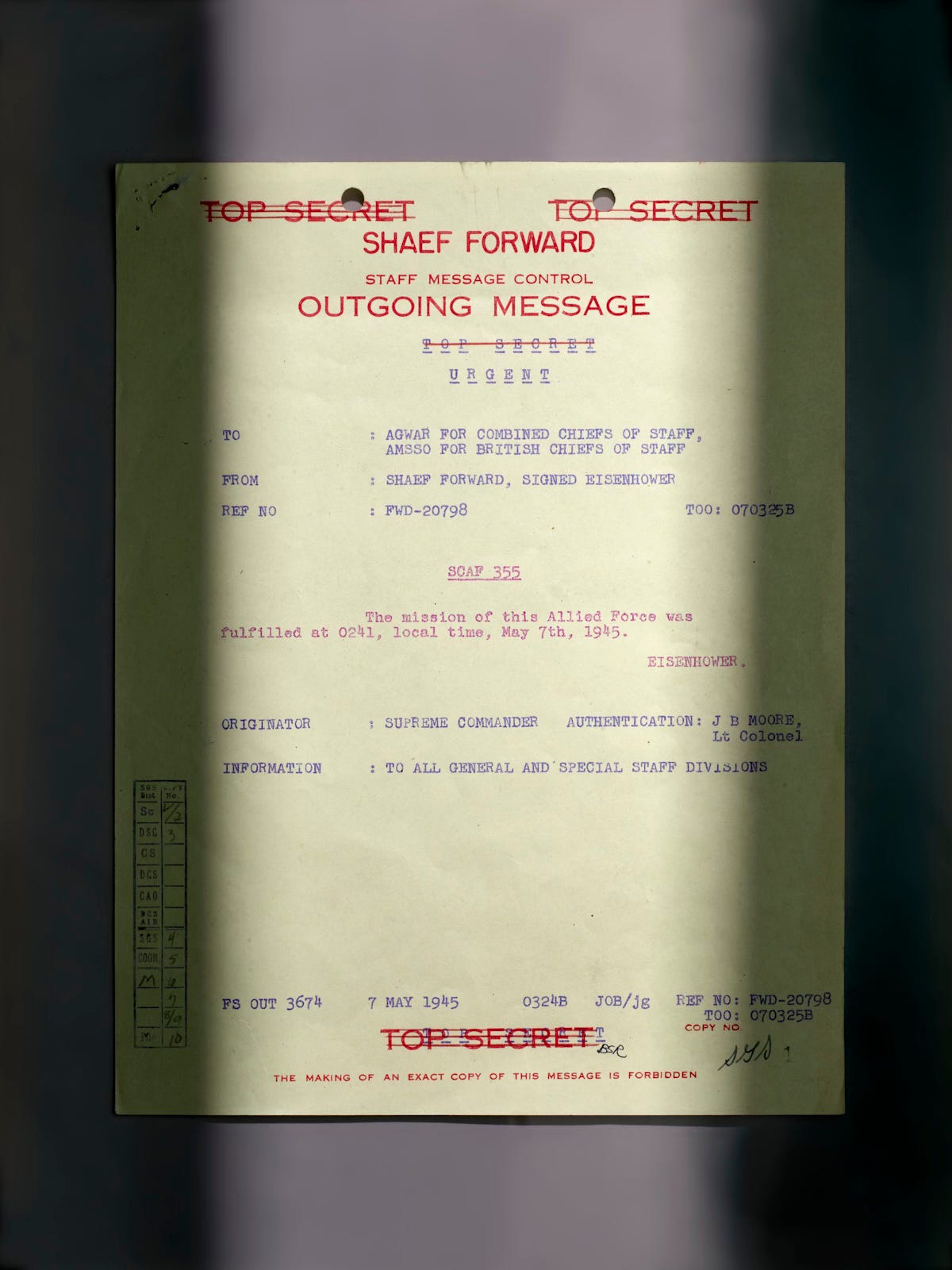
Dönitz, realizing his gamble had failed, radioed his authorization for Jodl to surrender. After the signing was completed at 2:41 a.m., it took about 20 minutes for the news to be relayed to Eisenhower. When he sat down to cable the news to U.S. Army Chief of Staff, General George C. Marshall, he dispensed with any flowery language and simply let the event speak for itself: “The mission of this Allied Force was fulfilled at 0241, local time, May 7th, 1945.” The rest of the world would celebrate VE (Victory in Europe) Day on May 8th.
The Eisenhower Presidential Library and Museum in Abilene, Kansas houses the actual cable in its archives. When I photographed it for my book, I literally got chills thinking about how this one piece of paper marked the end of the greatest conflict in human history. Eighty-one years later, Eisenhower’s choice to annotate history with a single line, says volumes about his stoic sense of duty to complete what he routinely referred to as a “crusade” against totalitarianism.
With all the democratic backsliding occurring both in the U.S. and around the world, we sure could use some Eisenhower energy right about now.
Happy VE day everyone.
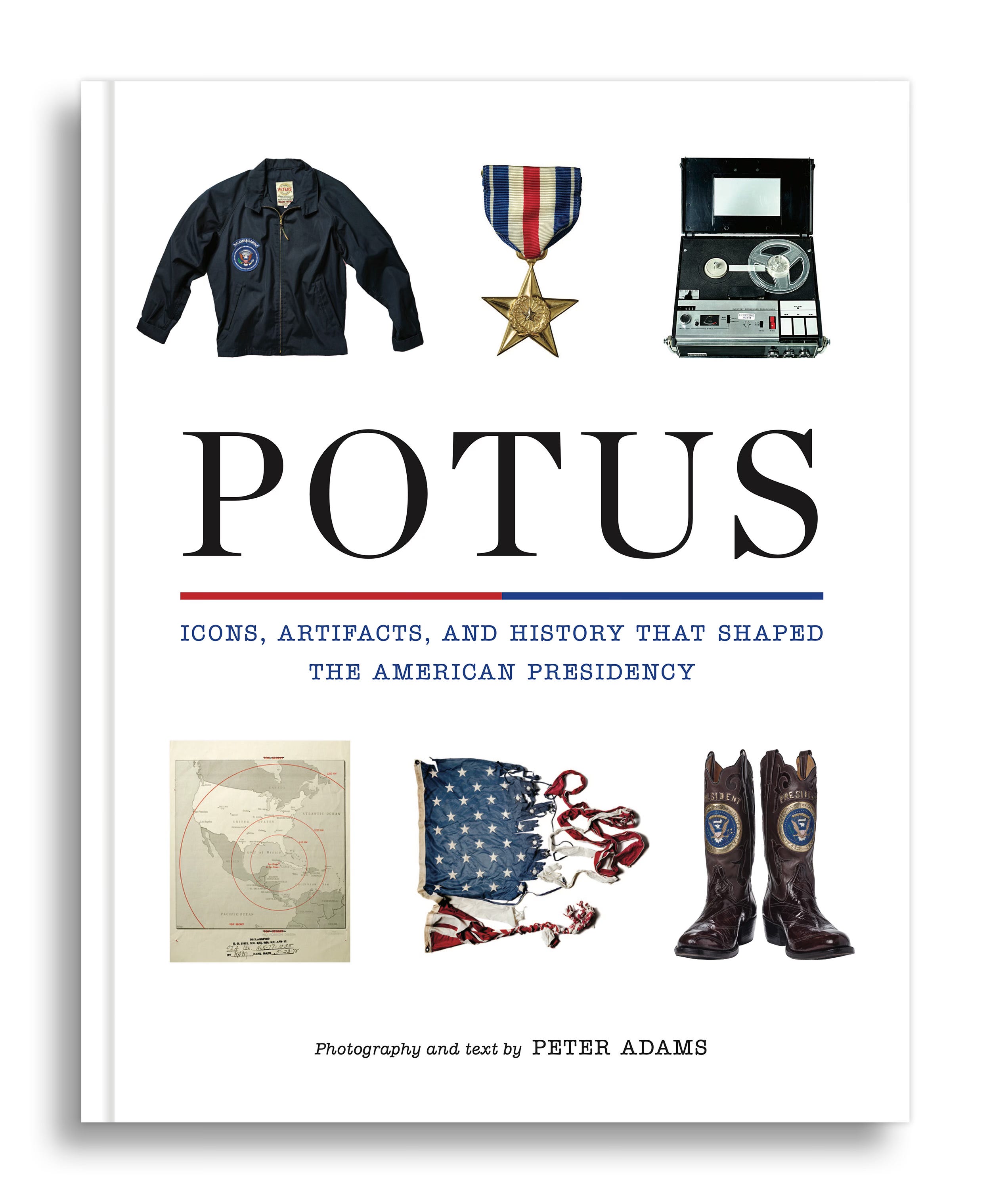
If you enjoyed this post, please consider buying my book: