The Purchase of a Lifetime
How the Louisiana Purchase expanded presidential power and changed the nation forever.

In 1803, President Thomas Jefferson sent envoys to Paris with a $10 million budget to buy New Orleans. Instead, Napoleon Bonaparte, who was facing a significant cash shortage for his upcoming wars, proposed a far more expansive deal.
In exchange for $15 million, the United States acquired Napoleon’s entire Louisiana Territory which encompassed a vast region that stretched from the Mississippi River to the Rocky Mountains and from the Gulf of Mexico to the Canadian border.
The 530 million-acre purchase, which came to be known as the Louisiana Purchase, doubled the size of the United States overnight and set it on a course to become a continental power. While the acquisition was a diplomatic success for the Jefferson administration, it also presented complex challenges and lasting consequences.
Because it took weeks for a letter to cross the Atlantic, Jefferson’s envoys could not ask for permission. They knew Napoleon might change his mind, so they gambled and signed the deal on April 30, 1803, without knowing if Jefferson or Congress would actually back them up.
When the news reached Jefferson, he was conflicted. As a “strict constructionist,” he believed the federal government only had the powers specifically listed in the Constitution—and the Constitution said nothing about buying land from foreign nations.
While he briefly considered drafting a constitutional amendment to make it legal, his advisors talked him out of it fearing that Napoleon might get impatient and scrap the deal. Believing that the massive benefit to the country outweighed the establishment of a new precedent, he let the action stand and sent the treaty to Congress for ratification.
Constitutionally speaking, no president had ever attempted such a massive expansion, and the purchase sparked intense debate over executive authority to acquire new territory. More significantly, while the land was transferred between France and the United States on paper, it was already inhabited by numerous Indigenous nations. The subsequent westward expansion facilitated by the purchase ultimately led to decades of conflict and the forced displacement of Native American tribes.
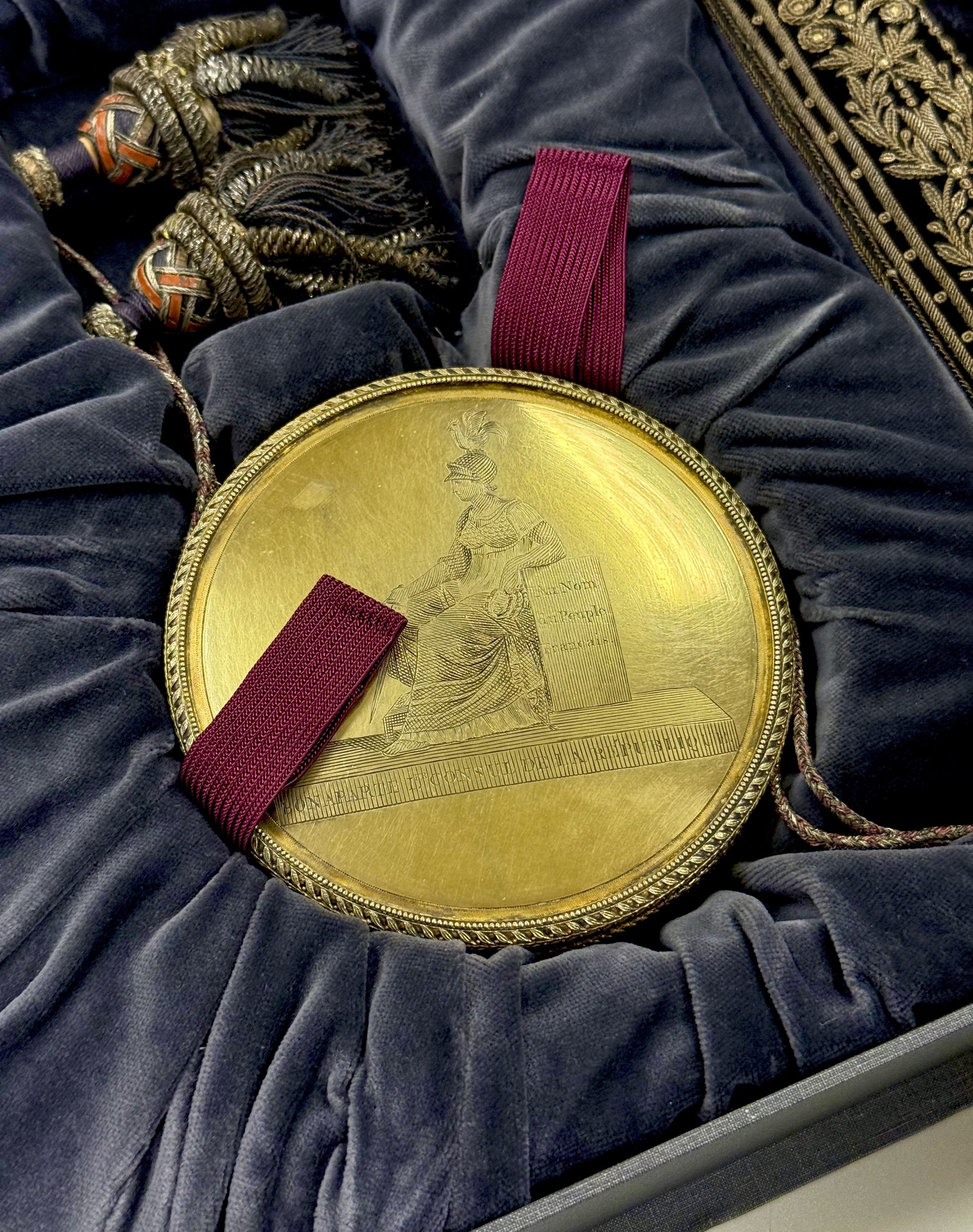
Earlier this year, while photographing for my upcoming book on the modern presidency, I had the privilege of seeing one of the original copies of the purchase agreement up close inside the vaults at the National Archives in Washington D.C. If you look closely you can actually see Napoleon’s signature.


Stay tuned for more presidential history.
-Peter
If you enjoyed this post, please consider buying my book: